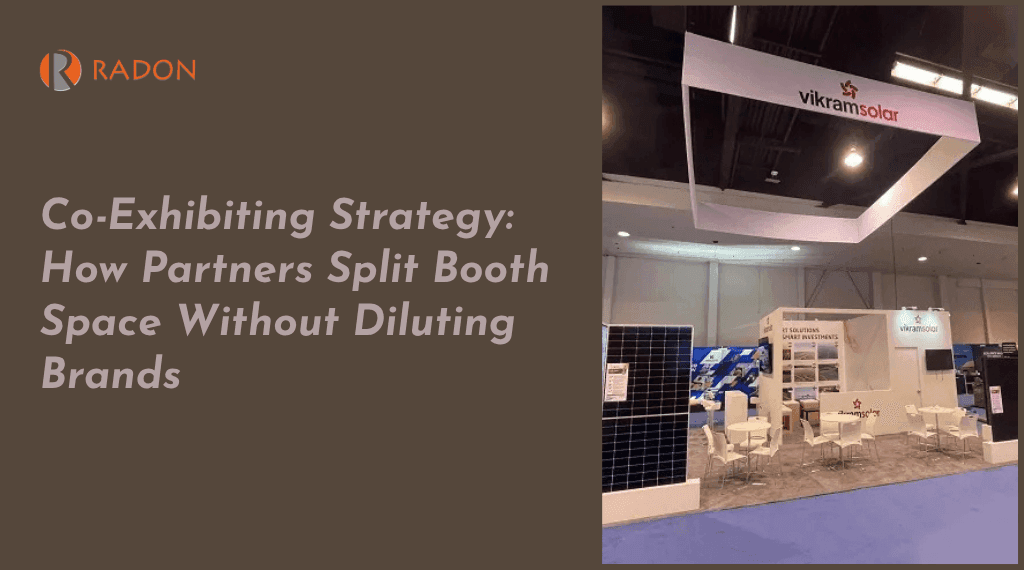
Co-exhibiting is a smart, high-ROI strategy for technology partners, joint ventures, regional distributors, and complementary solution providers seeking to maximise trade show budgets. While sharing an exhibition booth significantly cuts costs, poor planning risks confusing attendees, during individual brand identity, and causing disputes over lead ownership.
In this article, we’ll learn about practical co-exhibiting strategies to help partners design a seamless shared space, delivering a unified visitor experience while preserving distinct brand presences.
Co-exhibiting occurs when two or more distinct businesses share a single trade show booth to showcase joint product integrations, technology ecosystems, or regional distributor alliances. As event costs rise, sharing exhibition space offers a strategic pathway for brands to expand their market reach.
Partnering on the show floor unlocks substantial commercial and operational advantages:
However, successful co-exhibiting requires far more than splitting floor space and demands careful strategic alignment, clear brand boundaries, and synchronised execution.
Before drafting floor plans or discussing graphic layouts, co-exhibiting partners must align on core business objectives. Without early agreement on expectations, partners risk pursuing competing priorities that disrupt booth operations and confuse visitors.
We help you define clear objectives before committing to space, such as:
Assign each partner a clearly defined, visually distinct zone within the booth. Dedicating specific physical footprints for individual product demos, signage, and collateral ensures each brand maintains its distinct identity without competing for attention.
A professional booth builder will pool resources to build premium communal features so that it draws foot traffic. It must include integrated shared operational zones that include,
A joint presentation stage for scheduled live demos and thought leadership sessions.
Design intuitive foot traffic pathways that guide attendees seamlessly from shared high-traffic entry points into dedicated partner zones. With such a structured flow, it allows visitors to absorb the joint value proposition first before diving into company-specific solutions.
Maintain visual harmony using complementary colour palettes and consistent graphic hierarchies. Position individual logos, digital displays and clear wayfinding signage at designated heights so both brands receive equal prominence. Strategic visual balance prevents booth clutter while ensuring each partner retains immediate brand recognition.
Co-exhibiting succeeds when partners tell a unified story rather than shouting competing marketing messages. Any lack in a clear narrative framework or conflicting headlines will confuse visitors and dilute the impact of both brands.
You must structure your shared messaging with a multi-tiered hierarchy:
Translate this narrative seamlessly across all communication channels:
Lead distribution is often the greatest point of friction between co-exhibiting partners. Without clear rules established prior to the event, post-show disputes over lead attribution and follow-up rights can damage commercial relationships.
You must establish transparent lead governance before arriving on-site:
Formally, you must document all lead distribution guidelines within the pre-show project charter. A clear automated workflow eliminates ambiguity and allows both sales teams to focus purely on converting prospects.
Dividing expenses fairly is vital to maintaining trust and avoiding financial friction between co-exhibitors. Share exhibition costs typically encompass space rental, structural construction, utility hookups, A/V equipment, installation and dismantle labour, freight logistics, and daily cleaning services.
Instead of simply defaulting to an arbitrary 50/50 split, you must allocate expenses using a transparent, formulaic model based on four core criteria.
Sharing booth space requires precise coordination. Here’s the checklist to identify and avoid common operational traps before stepping onto the show floor.
Proactively addressing these pitfalls ensures a smooth partnership, preserves brand equity, and maximises event returns for all involved.
You must ensure a seamless partnership, perfect brand alignment and flawless trade show execution with this practical summary checklist for your next shared booth presence:
Sticking to this structured roadmap keeps both partner organisations fully aligned, highly organised, and focused on maximising event returns.
Q. What is Co-exhibiting?
Ans: Co-exhibiting is a collaborative trade show strategy where two or more non-competing businesses share a single booth to reduce costs, expand market reach, and showcase complementary products.
Q. How should partners divide booth space?
Ans: You need to divide space using dedicated brand zones based on financial contribution, product footprint, or floor plan layout, while reserving central high-traffic areas for shared networking and receptions.
Q. How can multiple brands maintain their identity?
Ans: You need to maintain distinct identities by establishing clear visual boundaries using designated wall graphics. Also, it's vital to balance signage placement while adhering to unified overhead design hierarchy.
Q. Who owns shared exhibition leads?
Ans: Lead ownership depends on pre-show agreements. Leads generated from specific partner zones belong to that brand, whereas shared ecosystem leads are co-owned or routed based on prospect interest.
Q. What is the best CRM strategy for co-exhibitors?
Ans: Utilise a badge scanner with custom lead-tagging capabilities. Automated metadata tags ensure prospects are immediately routed to the appropriate partner’s CRM system without manual post-show sorting.
Successful co-exhibiting relies on strategic planning, clear spatial design, consistent messaging, and transparent lead management. When you align on shared objectives, designate distinct brand zones, and automate lead routing, it avoids any operational friction and brand dilution.
When executed effectively, shared trade show spaces allow businesses to significantly reduce exhibition expenses while simultaneously maximising visual impact, strengthening industry partnerships, and driving superior return on investment. RADON LLC, a trusted trade show booth builder, can help co-exhibiting partners plan and deliver a professional booth space that supports both brands and their shared goals. Contact us to discuss your next trade show booth project.